
- By admin
- In Uncategorized
- Tags Business
The Homeowner’s Guide to Chicago Basement Waterproofing and Sump Pumps
Why Chicago Basement Waterproofing Should Be on Every Homeowner’s Radar
If you’re dealing with a wet or musty basement, Chicago basement waterproofing is likely the solution you need — and the sooner you act, the less damage you’ll face.
Quick answer: What are your main options for waterproofing a Chicago basement?
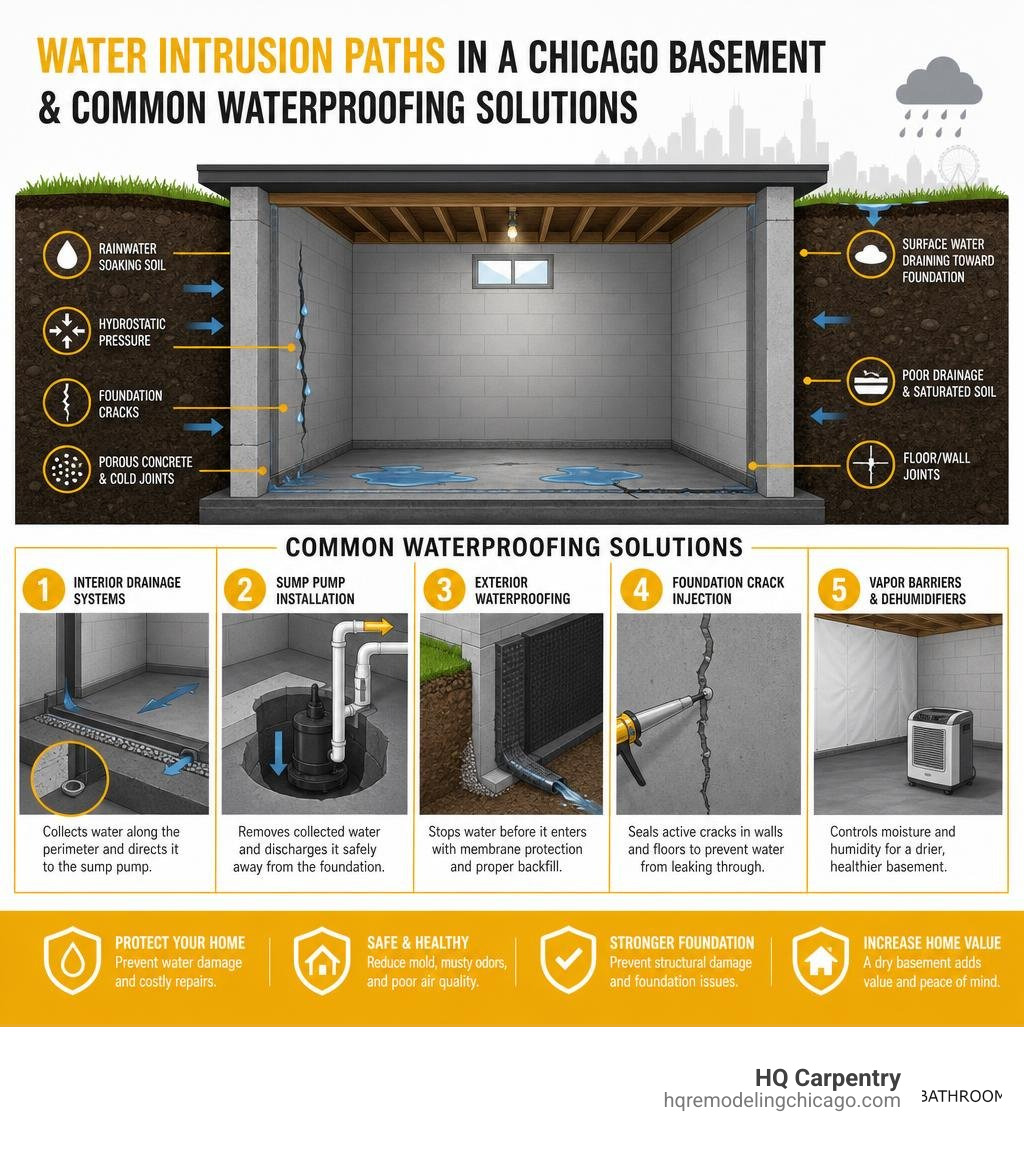
- Interior drainage systems — French drains and perimeter channels installed beneath the floor that redirect water to a sump pump
- Sump pump installation — Removes collected water and discharges it away from the foundation
- Exterior waterproofing — Excavation around the foundation, membrane application, and backfill to stop water before it enters
- Foundation crack injection — Epoxy or polyurethane sealing of active cracks in walls or floors
- Vapor barriers and dehumidifiers — Control moisture and humidity after other systems are in place
Chicago homes — from classic bungalows in Portage Park to older two-flats in Lincoln Park and luxury homes along the North Shore — face some of the toughest basement conditions in the country. Heavy spring rains, snowmelt, and the region’s dense clay soil all work together to push water toward your foundation.
Water damage doesn’t stay in the basement. Left unchecked, it leads to mold, structural damage, and a significant drop in home value.
At HQ Carpentry, we’ve been working with Chicago and North Shore homeowners since 2011 — and we know how quickly a small leak turns into a major problem. Whether you’re in Evanston, Wilmette, or a Chicago neighborhood, understanding your waterproofing options is the first step toward a dry, safe, and finished basement.
Why Chicagoland Homes Suffer from Wet Basements
Chicagoland homes are uniquely vulnerable to basement water intrusion. If you have ever walked downstairs in your Oak Park or Skokie home only to find a damp carpet or a pool of water near the wall, you are not alone. The local environment forces us to take foundation protection seriously.
Understanding why our basements leak is the first step toward finding a permanent solution. It is not just a matter of poor construction; it is a battle against local geology and the Midwestern climate.
The Impact of Chicago Soil and Climate
The soil surrounding your Chicago area home plays a massive role in how water behaves. Much of the ground in places like Wilmette, Glenview, and Northbrook consists of heavy, dense clay. Unlike sandy soils that allow water to drain away quickly, clay acts like a sponge, absorbing water and holding onto it for long periods.
When we experience heavy spring rains or rapid winter snowmelt, this clay soil expands dramatically. This expansion leads to two major physical phenomena:
- The Clay Bowl Effect: When a home is built, a large hole is excavated. Once the foundation is poured, the soil filled back in around the walls (the backfill) is looser than the undisturbed, natural clay surrounding it. This creates a virtual “bowl” around your home that collects water and channels it directly against your basement walls.
- Hydrostatic Pressure: As the clay soil saturates, the weight of the trapped water exerts immense pressure against your foundation. This pressure forces water through even the microscopic pores of concrete, eventually leading to structural cracks and active leaks.
In addition to our soil, Chicago’s infamous freeze-thaw cycles exacerbate the problem. During our freezing winters, water in the soil expands as it turns to ice, pushing against your foundation. When spring arrives in June 2026, the rapid thaw leaves gaps and cracks behind, giving water an easy path straight into your living space.
Common Causes of Basement Leaks
Water is incredibly persistent and will find any path of least resistance. In Chicago homes, we typically see water entering through several common weak points:
- Foundation Cracks: As homes settle over time, concrete foundation walls develop hairline cracks. Over the years, hydrostatic pressure widens these gaps, turning minor wall cracks into active water pathways.
- The Cove Joint: This is the seam where your concrete basement floor meets the foundation wall. Because these two elements are poured at different times, they are not structurally bonded. When groundwater levels rise, water is easily forced up through this joint.
- Leaking Window Wells: Without proper covers or drains, window wells quickly fill with water during heavy downpours, leading to sudden basement flooding through the window seals.
- Floor Cracks: Hydrostatic pressure beneath your concrete slab can push water upward through cracks in the basement floor.
- Downspout and Gutter Failures: When gutters are clogged or downspouts discharge water right next to the foundation, they dump hundreds of gallons of water directly into the “clay bowl” surrounding your home.
Interior vs. Exterior Chicago Basement Waterproofing Solutions
When it comes to protecting your basement, there are two primary schools of thought: managing water after it enters, or stopping it before it ever reaches your foundation. Both methods have their place depending on your home’s layout, your budget, and your long-term goals for the space.
| Feature | Interior Drainage System | Exterior Waterproofing |
|---|---|---|
| Primary Goal | Relieve hydrostatic pressure and safely redirect water | Stop water from ever penetrating the foundation walls |
| Installation Method | Sub-floor trenching, drain tile, and sump pump installation | Excavation around the exterior foundation to the footings |
| Disruption | Limited to the basement interior; landscaping remains intact | High exterior disruption; yard, patios, and landscaping excavated |
| Best For | Finished basements, tight lot lines, and cost-effective protection | Preventing structural concrete deterioration from the outside |
| Permits Required | Rarely required for standard interior drainage | Often required for grading, excavation, and public discharge |
Signs Your Home Needs Chicago Basement Waterproofing
It is vital to recognize the early warning signs of water intrusion before you begin a basement finishing project. If you notice any of the following signs in your home, you should seek professional basement waterproofing services immediately:
- Musty Odors: A persistent, damp smell is often the first indicator of hidden moisture behind drywall or under flooring.
- Efflorescence: This is a white, powdery residue left on concrete walls. It occurs when water evaporates, leaving behind dissolved minerals.
- Peeling Paint or Wallpaper: Damp concrete walls will push moisture outward, causing paint to bubble and peel.
- Visible Mold or Mildew: Dark spots on walls, baseboards, or joists indicate high humidity and active water entry.
- Damp Floors or Carpeting: Water seeping up through floor cracks or the cove joint will quickly ruin flooring.
If you are experiencing these issues in the North Shore suburbs, looking into professional waterproofing solutions in Evanston or Glenview can help you assess the severity of your situation.
The Difference Between Interior and Exterior Methods
Exterior waterproofing is a preventative approach. It involves excavating the soil around your home down to the foundation footings, cleaning the walls, sealing cracks, and applying a heavy-duty waterproof membrane. While highly effective, it requires significant yard disruption and can be challenging in tightly packed Chicago neighborhoods like the West Loop or Lincoln Park, where homes sit close together.
Interior waterproofing, on the other hand, is highly practical and cost-effective. Instead of fighting the immense pressure of groundwater, interior systems relieve it. We install an interior drain tile system beneath the perimeter of your basement floor. This system catches water at the cove joint and redirects it to a highly reliable sump pump system, keeping your basement bone-dry and ready for finishing.
If you live in Oak Park, securing professional foundation repair is a great way to address localized structural cracks alongside your interior waterproofing system.
Sump Pumps and Interior Drainage Systems
An interior drainage system is the unsung hero of dry basements. It works quietly beneath your feet to ensure that heavy rains and high water tables never disrupt your daily life.
How Interior Drainage and Sump Pumps Work
The installation of an interior drainage system is a precise process. First, we carefully remove a narrow strip of the concrete floor along the perimeter of your basement walls. We then excavate a trench and lay down a perforated drain tile pipe surrounded by washed river stone.
When groundwater rises, it naturally flows into the perforated pipe rather than seeping through your floor or cove joint. This pipe directs the water to a sealed sump basin embedded in the floor. Inside the basin, a powerful primary sump pump stands ready. Once the water reaches a certain level, the pump activates, pushing the water out of your home through a dedicated discharge line.
For homeowners in Niles, reviewing Angi’s list of top waterproofing pros in Niles, IL can provide peace of mind when selecting qualified local technicians to handle these heavy-duty plumbing and drainage installations.
Sump Pump Battery Backups and Maintenance
A sump pump is only as good as the power source running it. Unfortunately, the heavy storms that bring torrential rains to Chicagoland are the exact same storms that knock out our power grids. If your power goes out, a standard pump will stop working, leaving your basement completely unprotected.
This is why we strongly advise against relying solely on a single primary pump. A complete system should include:
- A Heavy-Duty Primary Pump: Designed for everyday water removal.
- A Battery Backup Sump Pump: This secondary pump runs on a dedicated battery system. If the power goes out, or if the primary pump fails due to mechanical issues, the backup system automatically takes over.
- High-Water Alarms: Modern systems feature smart monitoring that alerts your phone if water rises too high or if the backup pump is activated.
Regular maintenance is also key. We recommend testing your sump pump seasonally by pouring water into the basin to ensure the switch activates. Additionally, make sure your exterior discharge line is clear of debris, leaves, and winter ice so water can flow away safely. If you reside in Elmhurst, consulting local experts for basement waterproofing can help you establish a reliable seasonal maintenance routine.
Frequently Asked Questions About Chicago Basements
How do permits work for Chicago basement waterproofing?
Navigating local building codes can be complex. For standard interior drainage systems and sump pump installations, building permits are rarely required because the work is contained within the home’s footprint and does not alter the home’s structural integrity.
However, if your waterproofing project involves exterior excavation, changes to your yard’s grading, structural foundation stabilization (like piering), or tapping into city sewer lines for discharge, you will need to acquire building permits. At HQ Carpentry, we handle the entire building permit acquisition and inspection process for our clients, ensuring your project meets all local Chicago and suburban building codes.
How long does basement waterproofing last?
When installed by experienced professionals using high-quality materials, a basement waterproofing system can easily last for the entire life of the structure. High-quality interior drain tile pipes do not degrade, and modern vapor barriers are designed to withstand decades of soil contact.
The primary component that will require periodic replacement is your sump pump. Standard primary pumps typically have a lifespan of 5 to 10 years depending on how frequently they run. Investing in high-grade pumps and keeping your battery backup system fresh ensures your home remains protected indefinitely.
Will waterproofing stop basement mold and musty smells?
Yes, absolutely. Mold and musty odors are direct results of high humidity and standing moisture. By installing an interior drainage system, sealing foundation cracks, and applying vapor barriers to the walls, you eliminate the source of dampness.
To achieve optimal air quality, we often recommend installing a dedicated basement dehumidifier alongside your waterproofing system. This keeps the relative humidity below 50%, completely stopping mold spores from germinating and creating a fresh, healthy environment for your family.
Conclusion
Your basement has the potential to be one of the most valuable, comfortable spaces in your home. Whether you want to build a cozy family room, a home office, or a custom guest suite, protecting that investment starts with professional chicago basement waterproofing.
At HQ Carpentry, founded by Tomasz Pietrzyk, we bring over 15 years of hands-on experience to every project. Serving homeowners across Chicago and the North Shore suburbs since 2011, we are fully licensed and insured, proud of our 5.0 Google Reviews rating, and committed to using top-tier materials. We don’t believe in temporary patches; we deliver permanent, high-quality results.
Once your basement is dry and secure, we can seamlessly transition into our premier basement finishing and remodeling services to turn your newly protected space into a beautiful reality.
Don’t wait for the next heavy Chicago storm to test your foundation. Contact HQ Carpentry today or visit hqremodelingchicago.com to schedule your free estimate and take the first step toward a dry, beautiful home.