Basement Remodeling Estimates in Chicago: How to Avoid Budget-Busting Surprises
What Chicago Homeowners Need to Know About Basement Remodeling Estimates Before They Start
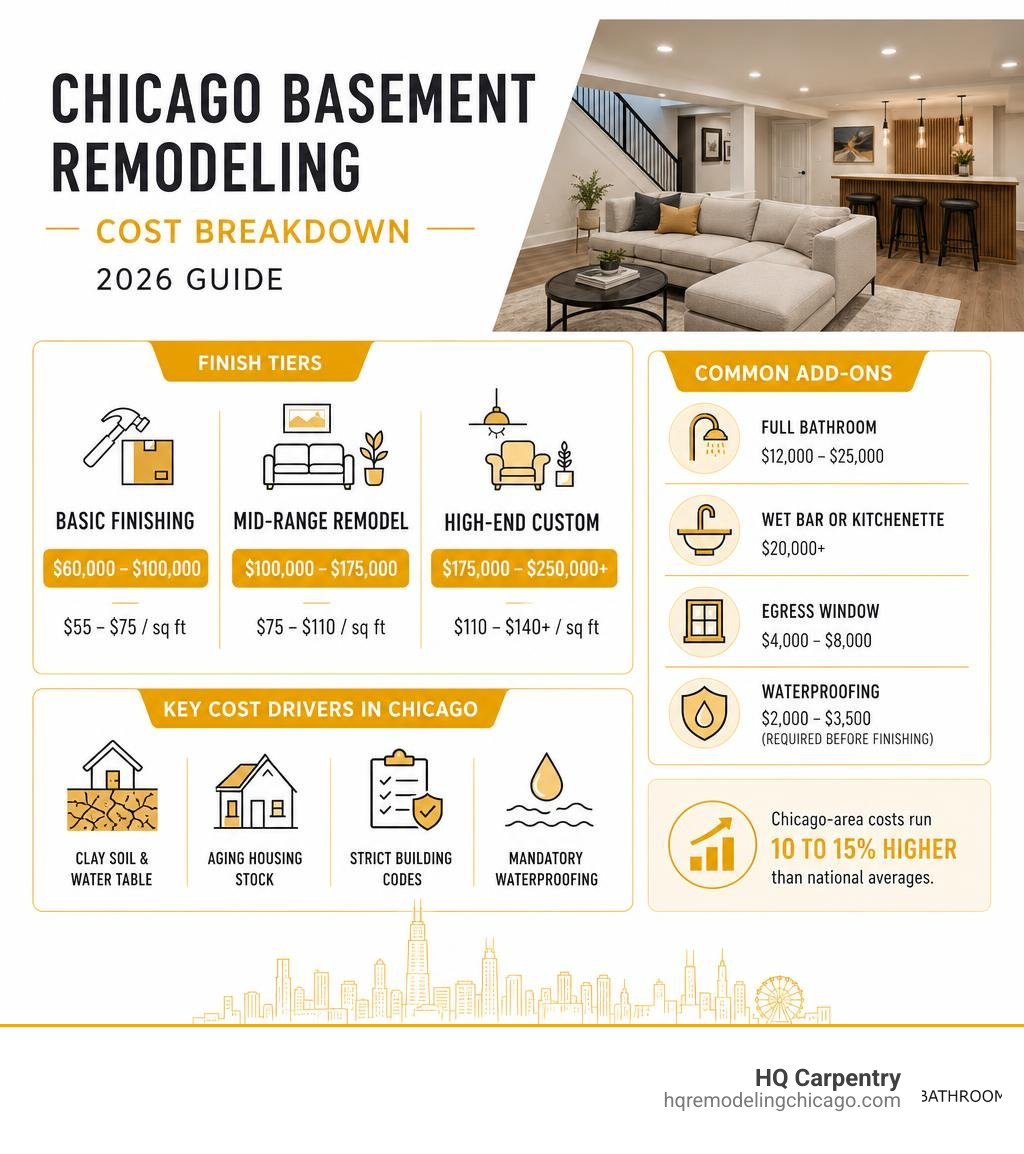
If you’re researching basement remodeling estimates in Chicago, here’s what you need to know right away:
| Finish Level | Typical Cost Range | Cost Per Sq Ft |
|---|---|---|
| Basic finishing | $60,000 – $100,000 | $55 – $75/sq ft |
| Mid-range remodel | $100,000 – $175,000 | $75 – $110/sq ft |
| High-end custom | $175,000 – $250,000+ | $110 – $140+/sq ft |
Common add-ons:
- Full bathroom: $12,000 – $25,000
- Wet bar or kitchenette: $20,000+
- Egress window: $4,000 – $8,000
- Waterproofing: $2,000 – $3,500 (required before finishing)
Chicago-area costs run 10 to 15 percent higher than national averages — due to clay soil, aging housing stock, strict building codes, and mandatory waterproofing requirements.
Your basement is one of the most underused spaces in your home. Whether you’re in a Chicago bungalow in Skokie, a vintage two-flat in Lincoln Park, or a larger home on the North Shore in Glenview or Wilmette, that unfinished square footage represents real, untapped value.
But here’s where many homeowners run into trouble: the estimate they receive at the start rarely matches what they expected to pay by the end. Surprise costs from waterproofing, permits, HVAC upgrades, and structural work can add tens of thousands of dollars to a project that seemed straightforward on paper.
This guide walks you through exactly what drives basement remodeling costs in the Chicago area, how to read and compare contractor estimates intelligently, and what to watch for so your project stays on budget.
Evaluating Basement Remodeling Estimates in Chicago

When you begin collecting estimates, you will quickly notice they are not all created equal. One contractor might hand you a single-page document with a single lump sum, while another provides a multi-page, line-item breakdown. Understanding how to read these documents is your first line of defense against unexpected change orders.
A comprehensive estimate must account for every phase of the project: structural adjustments, framing, insulation, drywall, electrical, plumbing, HVAC, flooring, and final finishes. If an estimate seems unusually low, it is highly likely that critical phases of the work have been omitted or under-budgeted.
For a realistic look at how these elements come together in a professional plan, you can explore More info about basement finishing.
How to Compare Basement Remodeling Estimates in Chicago
To make an apples-to-apples comparison, you must look past the bottom-line number and evaluate the details:
- Line-Item Transparency: A trustworthy estimate breaks down costs by trade. You should see separate lines for framing, plumbing, electrical, and drywall. If these are lumped together, ask for a detailed breakdown.
- Allowances vs. Fixed Costs: “Allowances” are placeholders for materials that haven’t been selected yet, such as flooring or light fixtures. If a contractor sets an unrealistically low flooring allowance, you will end up paying the difference out of pocket once you choose your actual materials.
- Contingency Funds: Every historic home in Evanston, Wilmette, or Oak Park holds secrets behind its plaster walls. A professional estimate should suggest a 10% to 20% contingency fund to cover unexpected issues like outdated wiring or hidden structural damage.
- Subcontractor Fees and Licensing: Ensure the estimate covers all subcontractor management fees. Every trade professional stepping into your home must be properly licensed and insured under Illinois regulations. For projects in the northwest suburbs, reviewing resources like the Snap Reno LLC: Home Remodeling Company in Niles, IL can provide helpful context on regional standards.
Budget-First vs. Design-First Planning
Homeowners generally approach their basement transformations in one of two ways:
- Budget-First: You establish a strict financial limit and design the space to fit within those boundaries. This approach keeps your finances secure but requires flexibility regarding high-end features and custom layouts.
- Design-First: You design your dream space first — complete with a home theater, wet bar, and guest suite — and then calculate the cost. While highly creative, this method often requires scaling back once the initial estimates arrive.
By utilizing a professional design-build approach, we help you align your financial investment with your design goals from day one. This keeps the project scope realistic and ensures that material specifications fit your budget before construction begins.
Key Cost Drivers in Chicago Basement Renovations

Basement renovations differ significantly from above-ground remodeling projects. Because basements sit below grade, they are subject to unique structural pressures, moisture challenges, and strict safety codes.
If you are planning a project in the western suburbs, you can learn more about specialized local solutions by viewing our Oak Park basement remodeling services.
Key Factors That Inflate Basement Remodeling Estimates in Chicago
Several regional factors contribute to higher basement remodeling costs in the Chicagoland area:
- Clay Soil and High Water Tables: Chicago’s heavy clay soil retains water, putting immense hydrostatic pressure on vintage foundations. This requires robust waterproofing measures that are not necessary in other parts of the country.
- Combined Sewer Systems: Many older neighborhoods in Chicago and near-north suburbs utilize combined storm and sanitary sewer systems. During heavy summer downpours, these sewers can back up into basements unless proper prevention systems are installed.
- Overhead Sewers vs. Gravity Drains: If your basement relies on a traditional gravity drain, converting to an overhead sewer system is highly recommended to prevent backflow. While this conversion adds to the initial investment, it protects your finished space from catastrophic water damage.
Waterproofing and Moisture Management
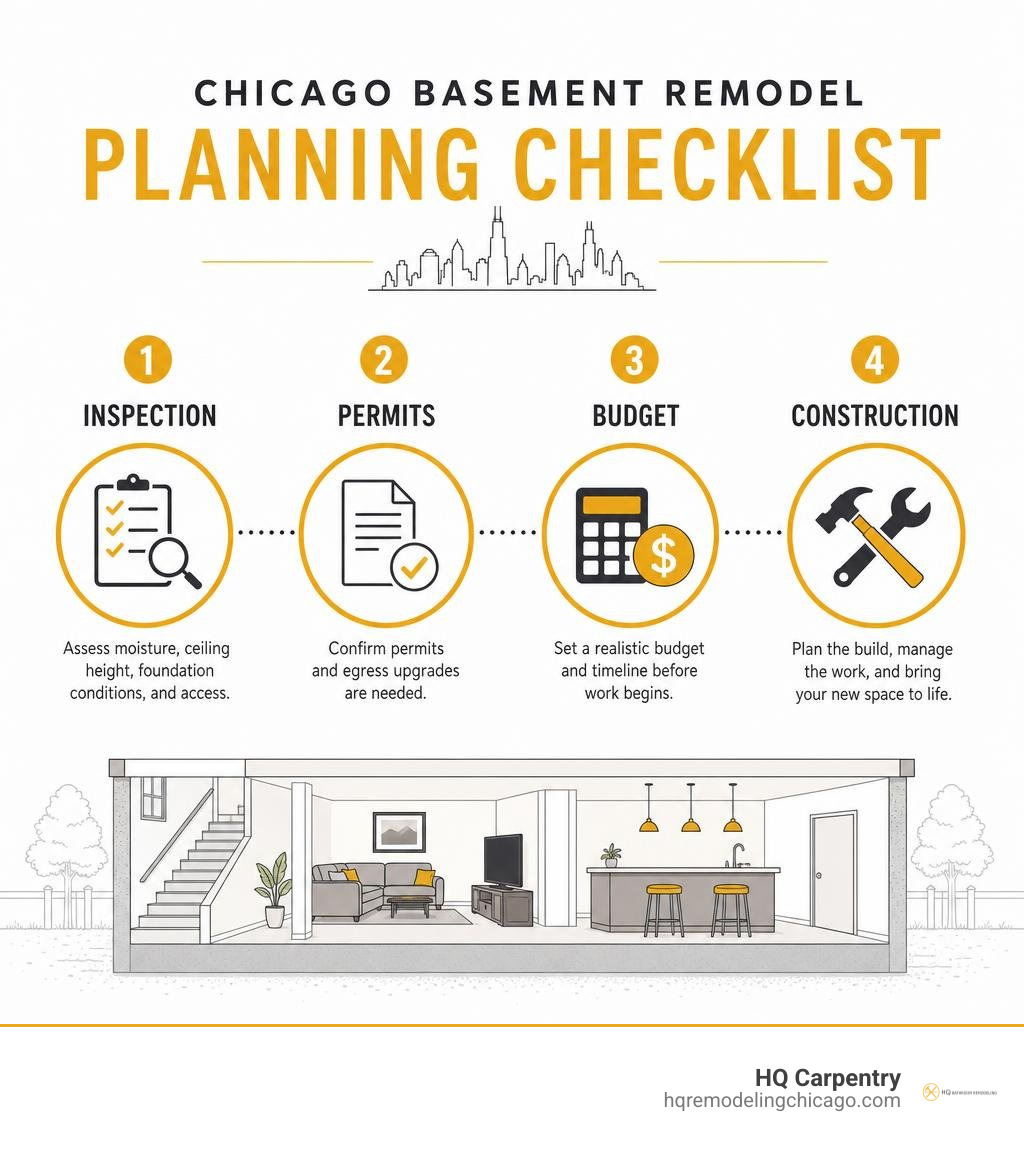
Waterproofing is a non-negotiable prerequisite for any successful basement project. Finishing a basement that has active moisture issues is a recipe for mold, ruined drywall, and wasted money.
A professional waterproofing strategy typically includes:
- Sump Pumps with Battery Backups: A primary sump pump is your main line of defense. However, because Chicago storms often cause power outages, a high-quality battery backup pump is essential to keep the system running.
- Interior Drain Tile Systems: This involves breaking the concrete floor along the perimeter of the foundation, installing a perforated drain pipe, and covering it with stone to direct water directly to the sump pit.
- Vapor Barriers: Installing a heavy-duty, 6-mil or thicker polyethylene vapor barrier on the concrete floor and behind framing prevents moisture from migrating into your flooring and drywall.
- Foundation Crack Sealing: Any active foundation cracks must be professionally injected with polyurethane or epoxy from the inside to prevent water seepage.
To understand how professional teams execute these structural and moisture-control phases, you can reference the standards outlined by the Basement Finishing & Remodel | Design-Build Firm .
Navigating Chicago Permits and Building Codes
Obtaining the correct building permits is essential for protecting your home’s resale value and ensuring your family’s safety. The Chicago Department of Buildings and suburban municipal offices (such as those in Skokie, Winnetka, and Arlington Heights) strictly enforce residential building codes.
For projects within the city, the Express Permit Program can expedite approvals for basic basement finishing that does not involve major structural alterations. However, if your plans include adding a bathroom, structural beams, or egress windows, a standard architectural plan review is required.
Key code requirements that impact your estimate include:
- Minimum Ceiling Height: Chicago building codes generally require a finished ceiling height of at least 7 feet. If your vintage home has low ceilings, you may need to consider underpinning (digging out and lowering the concrete floor), which can add significant structural costs.
- Egress Windows: If you plan to add a legal bedroom in the basement, building codes require a compliant egress window. This window must provide a minimum opening area of 5.7 square feet, with a sill height of no more than 44 inches from the floor, allowing for safe emergency exits.
To learn more about how municipal codes vary across the North Shore and western suburbs, explore our Suburban basement remodeling insights.
Frequently Asked Questions About Chicago Basement Remodels
How long does a basement remodeling project take in Chicago?
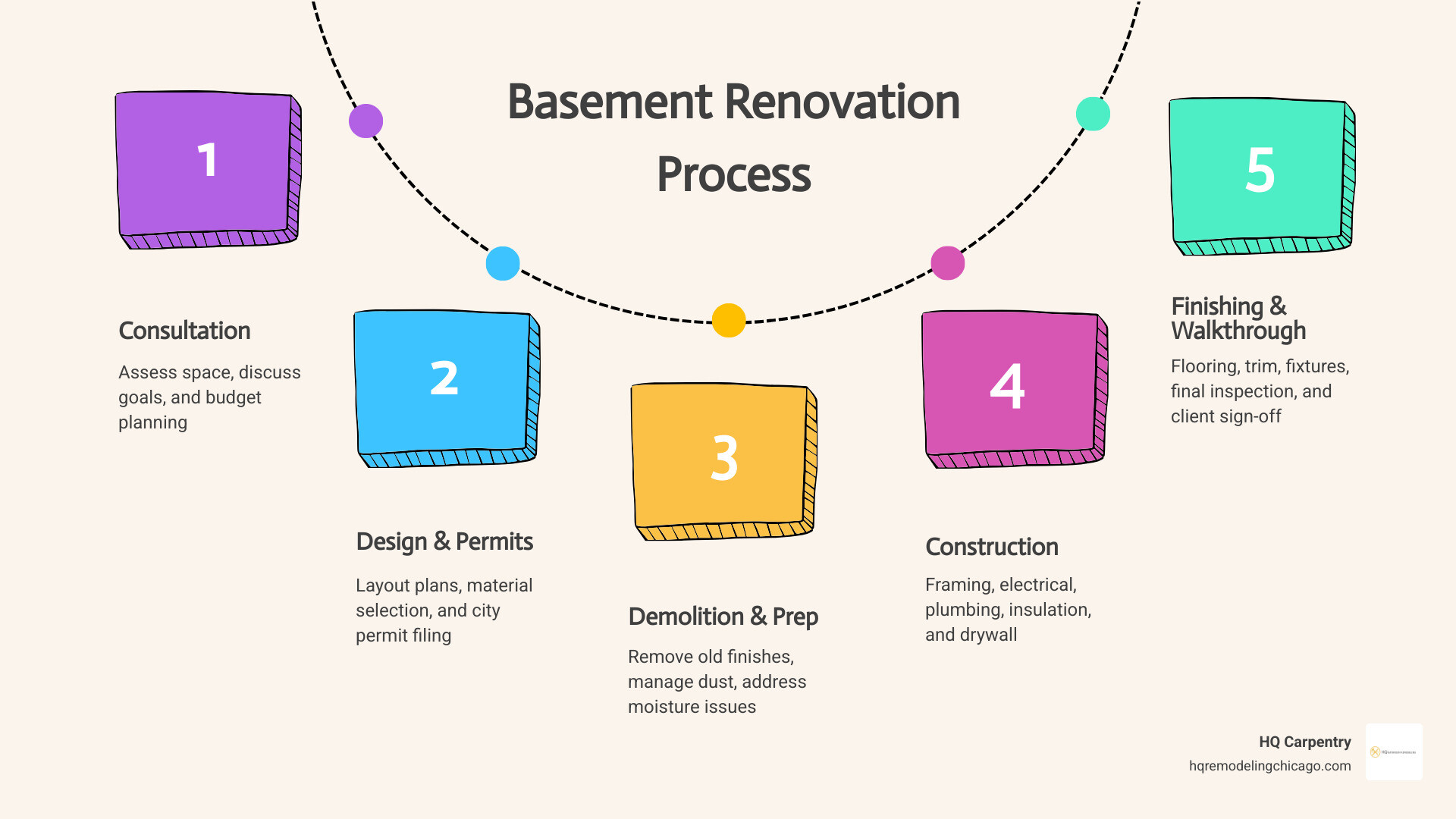
A typical basement remodeling project takes between 8 to 12 weeks of active construction. However, the entire process from initial consultation to final inspection takes longer due to the planning and permitting phases:
During the construction phase, you can expect the following progression:
- Demolition and Waterproofing: Week 1
- Framing and Rough-In Plumbing/Electrical/HVAC: Weeks 2–5
- Insulation and Drywall: Weeks 6–8
- Flooring, Trim, and Doors: Weeks 9–10
- Fixtures, Paint, and Final Details: Weeks 11–12
To compare timelines and municipal requirements in specific North Shore communities, you can review the Basement Remodeling Glencoe IL | 2026 Cost, Permits & Guide61 C or see how projects are managed in the western suburbs through the Elmhurst, IL Basement Remodeling – Hinsbrook Construction guide.
What is the expected ROI of a finished basement in the Chicago area?
According to recent regional real estate data, a professionally finished basement in the Chicagoland area typically returns 60% to 75% of its cost at resale.
Beyond the financial return, finishing your basement dramatically increases your home’s usable square footage without the massive expense and zoning headaches of building an above-ground addition. This is particularly valuable in high-demand neighborhoods like Lincoln Park, Skokie, and Glenview.
If you are ready to transition your lower level from a storage zone to a premium living space, you can read more about taking the first step: Stop crawling and start finishing with basement renovation near me.
What are the most common budgeting mistakes homeowners make?
- Skipping Waterproofing: Trying to save money by ignoring minor foundation cracks or skipping a battery backup for your sump pump is a critical mistake. A single heavy rainstorm can ruin expensive new carpeting and drywall.
- Ignoring Permits: Skipping the permit process to save on municipal fees can make your home incredibly difficult to sell in the future. Savvy buyers and home inspectors will check municipal records for unpermitted basement work.
- Underestimating HVAC Needs: Basements are naturally cooler and damper than upper levels. Simply extending existing ductwork without assessing your furnace’s capacity can leave your new space feeling uncomfortably cold. You may need to plan for dedicated zoning, a mini-split system, or radiant floor heating.
For a detailed look at how these elements are integrated into a complete home renovation project, you can view this Full Residential Remodel – Oak Park, Illinois case study.
To get an idea of current material pricing and market trends for the current year, check out the Basement Finishing Cost Chicago 2026 | Price Guide .
Conclusion
Navigating basement remodeling estimates in Chicago doesn’t have to be overwhelming. By understanding the unique structural, environmental, and municipal requirements of our region, you can partner with a contractor who will bring your vision to life without any budget-busting surprises.
At HQ Carpentry, we have been proudly serving homeowners across Chicago and the North Shore suburbs since 2011. Founded by Tomasz Pietrzyk, who brings over 15 years of hands-on, high-end remodeling experience, our team is fully licensed, insured, and committed to delivering exceptional craftsmanship. Our 5.0 Google Reviews rating reflects our dedication to transparent communication, premium materials, and beautiful results.
We serve homeowners throughout Chicago and surrounding communities, including Niles, Skokie, Glencoe, Elmhurst, Evanston, Glenview, Oak Park, Oak Brook, Burr Ridge, Park Ridge, Downers Grove, Wilmette, Winnetka, Northbrook, Arlington Heights, and Lincolnwood.
Are you ready to transform your basement into a beautiful, functional space your family will love? Call us today at (773) 968-3606 or visit our website to get started.
Ready to start your remodel?
Tell us about your project and we'll follow up with next steps.
Free Quote