Explore Functional Kitchen Cabinet Refacing Ideas for Your Remodel
Kitchen Cabinet Refacing Ideas That Keep Your Existing Layout
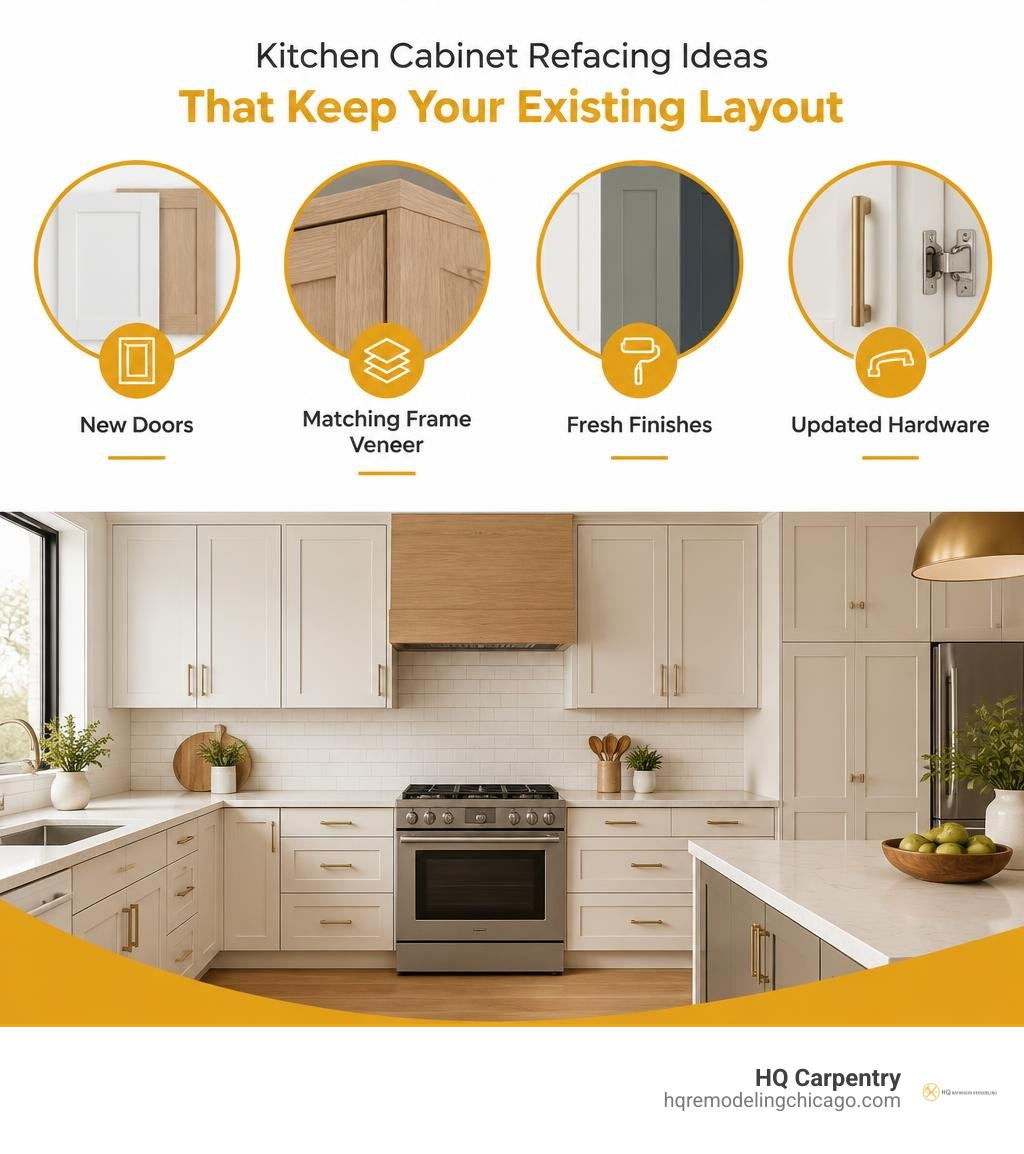
Kitchen cabinet refacing ideas include swapping dated doors for Shaker or flat-panel fronts, adding wood veneer to visible frames, choosing a fresh finish, and updating pulls and hinges. These changes can give a Chicago kitchen a new look while keeping sound cabinet boxes and the layout you already use.
Refacing works best when the boxes are sturdy and the layout meets your needs. If cabinets are sagging or have water damage, they need a closer look before new surfaces go on. Exploring creative refacing concepts allows you to update the style of your cooking space without committing to weeks of disruptive demolition.
Why Refacing Outdated Kitchen Cabinets Makes Practical Sense
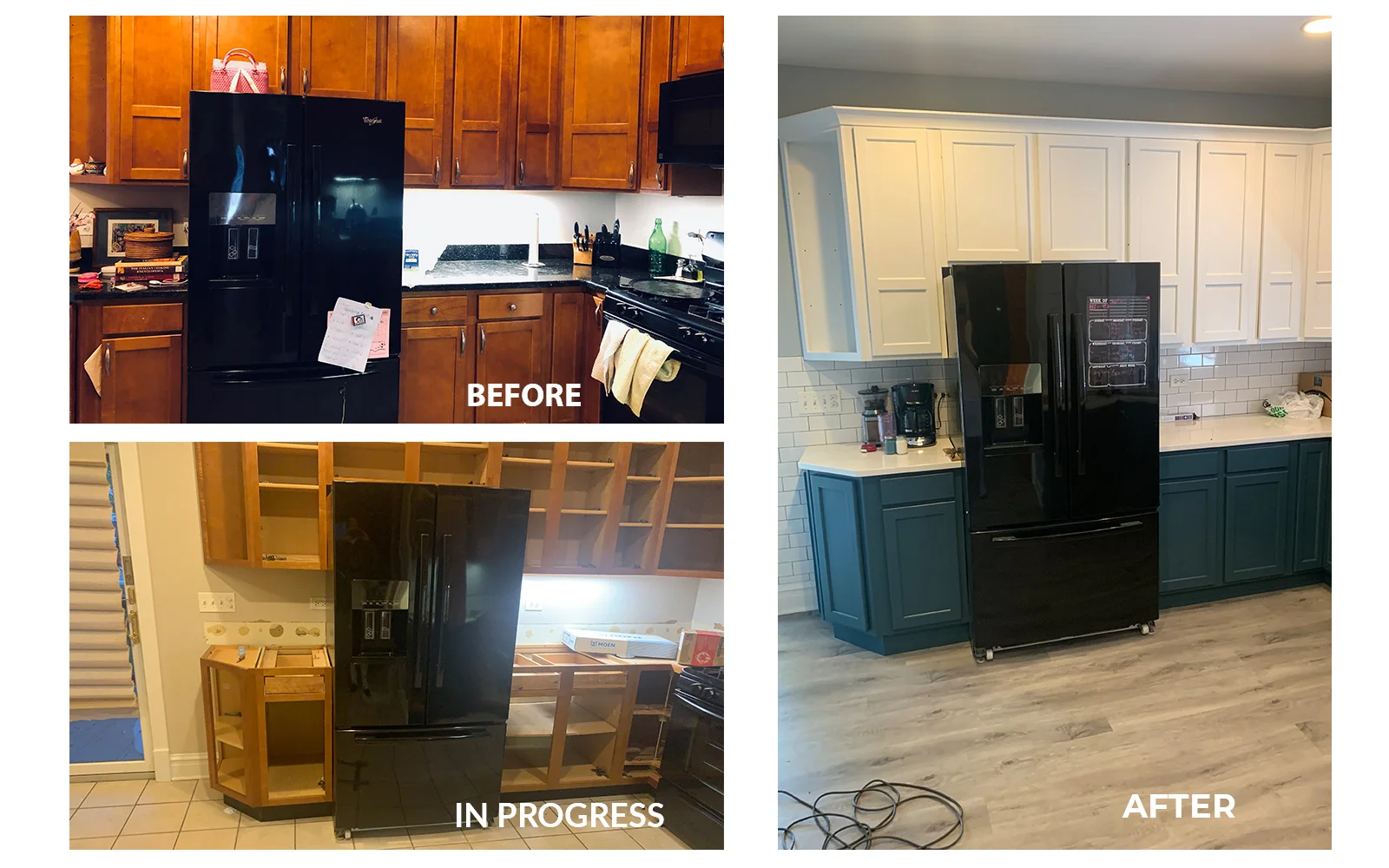
Cabinet refacing updates the exterior appearance of your kitchen while preserving the internal structural framework. Rather than tearing out entire cabinet runs, installers leave the existing cabinet boxes attached to the walls. We inspect the cabinet framing, face frames, and side panels to ensure the wood or composite structure remains solid, plumb, and clear of moisture damage.
Preserving functional cabinet boxes minimizes residential construction waste and shortens project schedules. A complete tear-out displaces the entire kitchen, requiring days of demolition, drywall patching, and extensive structural adjustments. With professional kitchen cabinet refacing, the primary workspace remains largely intact throughout the project, allowing you to maintain basic home routines without long periods of kitchen downtime.
The overall cost of cabinet refacing depends on key project drivers: kitchen footprint, linear footage of exposed face frames, door profile complexity, selected wood species or laminate materials, and hardware upgrades. Because refacing retains sound cabinet boxes, intact countertops, plumbing connections, and electrical hookups can often remain in place. A fixed written quote follows our free in-home estimate to establish all project requirements clearly.
Top Kitchen Cabinet Refacing Ideas for Modernizing Your Space

Homeowners in neighborhoods like Lincoln Park, West Loop, and Evanston often look for clean, modern cabinet aesthetics without reconfiguring historic room layouts. Selecting the right combination of door styles, facing veneers, and specialized hardware transforms dated builder-grade oak or dark wood into a tailored kitchen focal point.
Creative Door Styles and Kitchen Cabinet Refacing Ideas
The door style sets the visual foundation of your cabinetry. Swapping out arched cathedral panels or raised center profiles alters the entire architectural balance of the room. When planning a broader kitchen remodeling project, consider these door profile styles:
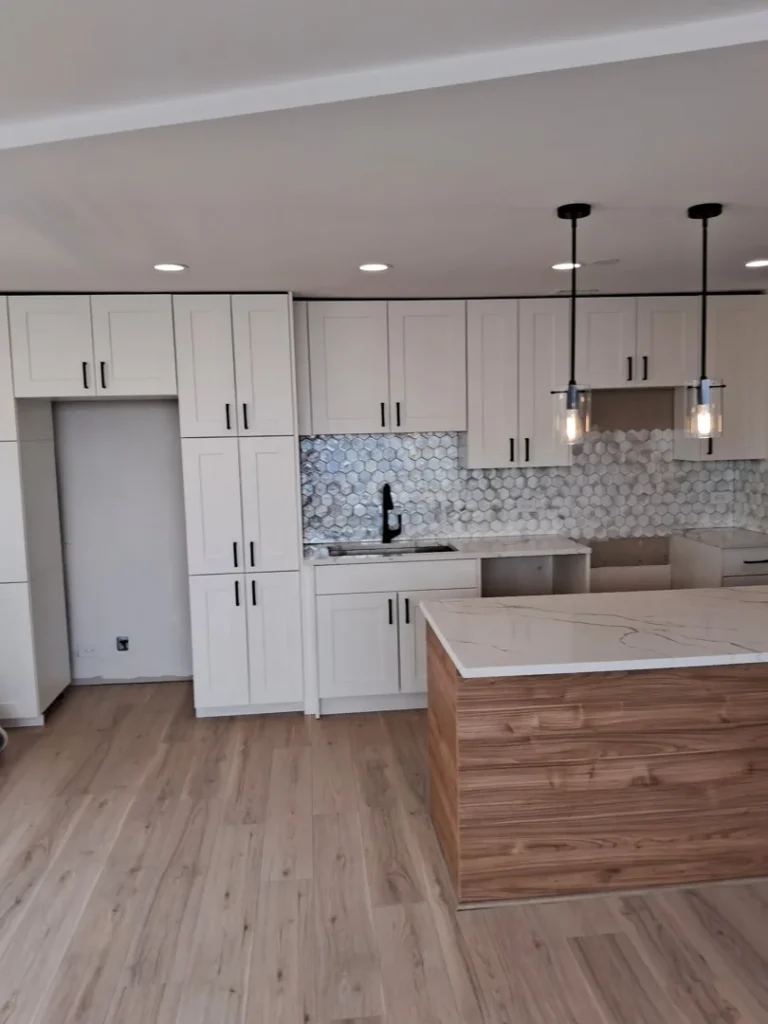
- Shaker-Style Doors: Characterized by a clean, recessed center panel and crisp four-piece perimeter frame, Shaker profiles provide a timeless appearance that fits classic Chicago bungalows as well as modern suburban homes in Downers Grove and Park Ridge.
- Flat-Panel Slab Fronts: Slab doors offer a smooth, flat surface with zero beveling. This minimalist profile works well in contemporary urban condominiums and transitional spaces.
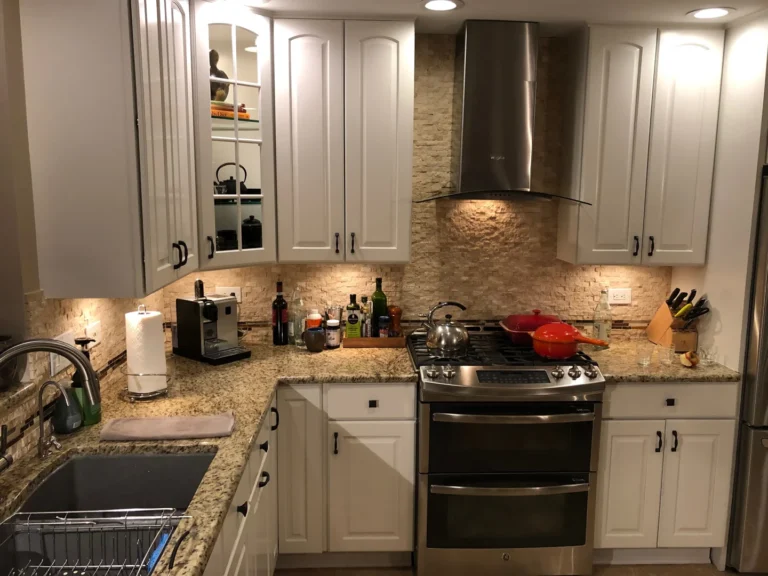
- Glass-Insert Accent Doors: Replacing select solid upper doors with tempered glass inserts breaks up heavy runs of solid cabinetry. Textured, frosted, or clear glass with interior display lighting highlights dishware and broadens the visual depth of narrow kitchens.
- Decorative Mullions: Adding geometric or traditional windowpane mullions over glass inserts introduces architectural interest to focal points, such as cabinets flanking a range hood or sink.
- Integrated J-Pull or Finger-Pull Profiles: Channel grooves integrated directly into slab door tops and drawer edges eliminate the need for surface-mounted handles, creating seamless, low-profile cabinetry lines.
Color Schemes and Finish Kitchen Cabinet Refacing Ideas
Refacing materials must match between the newly manufactured doors and the existing structural framework. Premium wood veneers, such as hard maple, cherry, or white oak, are applied to the face frames to harmonize with newly stained solid wood doors. For painted looks, paint-grade composite veneers or factory-applied finishes deliver consistent, durable color.
- Two-Tone Color Blocking: Installing darker hues or rich wood grains on lower base cabinets while using crisp white or soft neutral tones on upper cabinets anchors the space without diminishing natural light.
- Natural Wood and Warm Stains: Replacing heavy amber finishes with clear-coated natural maple or warm rift-sawn oak veneers brings organic texture into the kitchen.
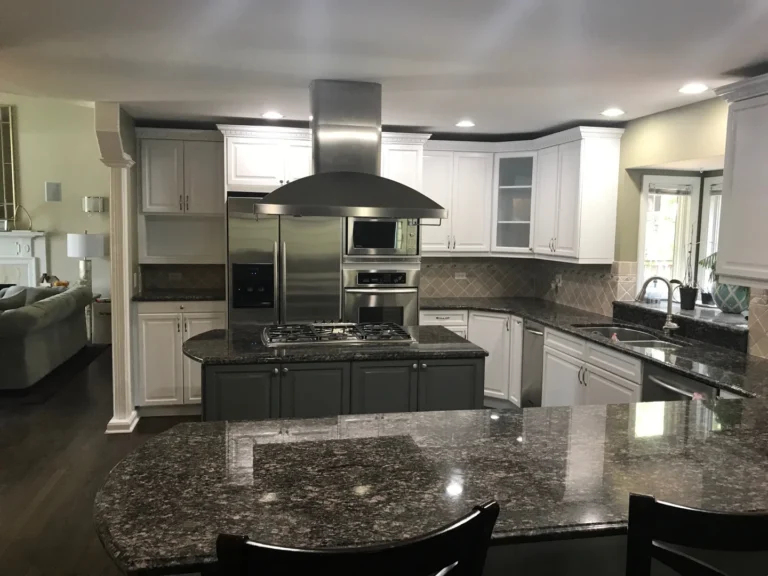
- Muted Charcoals and Deep Greens: Earthy, saturated hues on island bases or perimeter cabinetry offer depth and complement solid stone countertops.
- Modernized Light Stains on Oak: Applying neutral or desaturated stains over tight-grain veneers replaces outdated golden-yellow tones while preserving the organic texture of natural wood grain.
Upgrading Cabinet Hardware and Functional Storage Accessories
Hardware operates as functional trim across the cabinetry face. Modern concealed European cup hinges eliminate visible external barrel hinges, while integrated soft-close dampening mechanisms prevent doors and drawer fronts from slamming against the frames.
Interior storage retrofits enhance the usability of original cabinet boxes. Adding full-extension slide-out pantry trays, blind corner pull-out shelving, and under-cabinet LED task lighting optimizes workspace ergonomics without requiring structural alterations. A professional kitchen cabinet refacing installation includes precise hardware alignment and calibrated door reveals.
| Refacing Material Feature | Natural Hardwood Veneer | Rigid Thermofoil / Engineered Laminate |
|---|---|---|
| Primary Material Base | Thin-sliced natural timber (Maple, Oak, Cherry) | Heat-bonded PVC / engineered synthetic wrap |
| Finish Options | Custom stains, natural clear coats, or paint | Pre-finished solid colors and simulated wood grains |
| Surface Maintenance | Clean with wood-safe soap and soft microfiber cloth | Non-porous surface; wipes clean with mild household cleaner |
| Moisture Resistance | Requires sealed protective topcoat | Highly resistant to moisture; requires heat shields near ovens |
| Best Application | Classic residential framing and natural grain styling | High-traffic kitchens requiring uniform, low-maintenance surfaces |
Step-by-Step Overview of the Cabinet Refacing Process
Refacing cabinetry requires systematic carpentry steps to ensure tight joints, proper adhesion, and balanced door alignment across all openings.
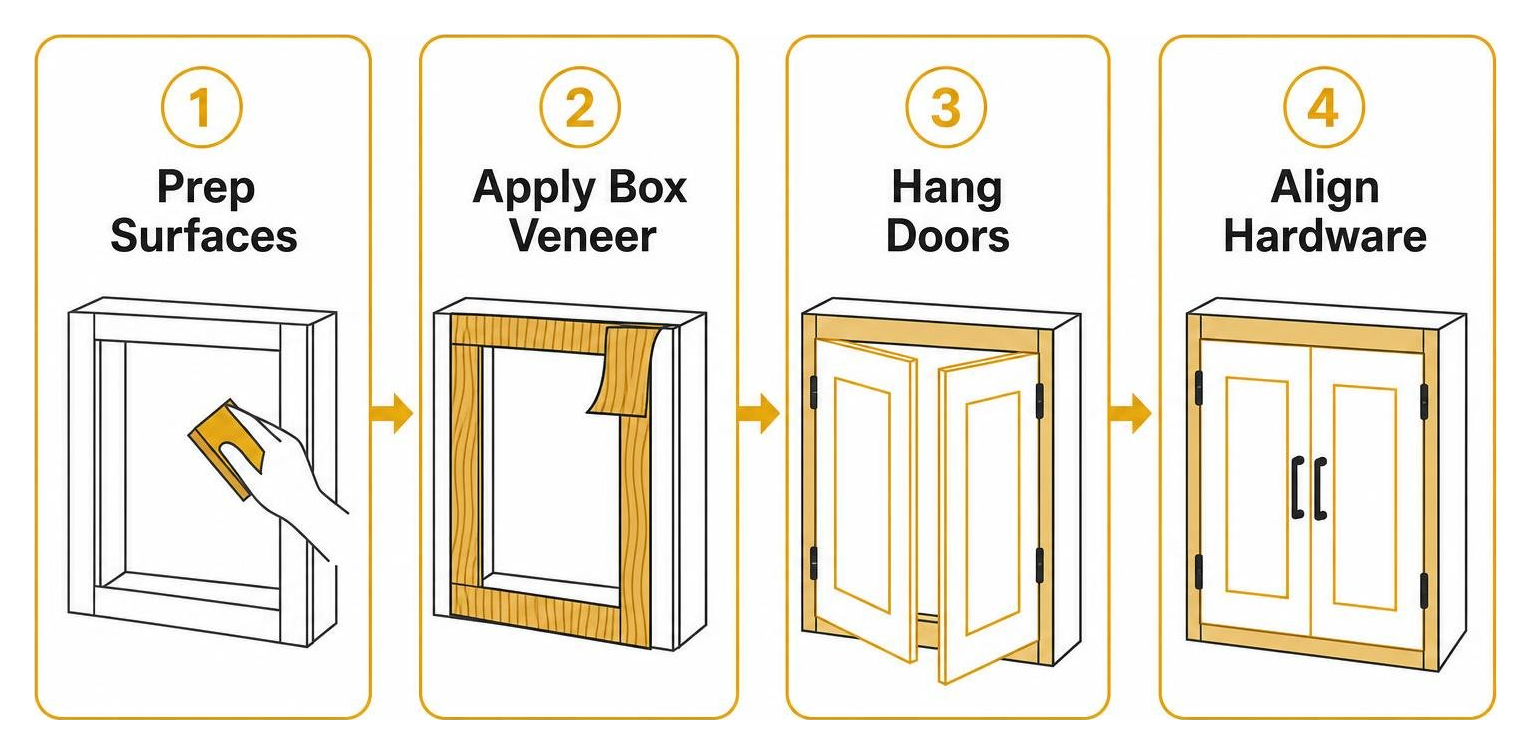
- Hardware and Door Removal: All existing cabinet doors, drawer fronts, and hardware hinges are removed and discarded. Drawer boxes are inspected for structural integrity and smooth glide operation.
- Surface Cleaning and Degreasing: Cabinet face frames, rails, stiles, and exterior end panels are thoroughly cleaned using specialized degreasing agents to remove kitchen grease, residues, and cooking oils that could weaken adhesive bonding.
- Substrate Preparation and Sanding: Exposed frame surfaces are scuffed with medium-grit sandpaper to break the original clear coat, creating a mechanical bond for new contact adhesives. When working on pre-1978 homes, contractors adhere to EPA Lead-Safe certification standards to manage older painted layers safely.
- Veneer Cutting and Application: Matching natural wood or laminate veneers are cut with an intentional overhang, applied directly to the face frame stiles and rails with industrial adhesive, and compressed firmly with a laminate roller to eliminate air pockets.
- Precision Edge Trimming: Excess veneer along face frame openings and cabinet perimeters is trimmed flush using a specialized laminate edge trimmer and hand rasps to ensure seamless edges without visible seams.
- Matching End Panel Installation: Quarter-inch matching finished end panels are bonded and fastened to exposed exterior cabinet box sides to maintain seamless material consistency across all visible angles.
- Door and Drawer Front Hanging: New pre-finished doors are hung using adjustable, concealed soft-close hinges anchored to the reinforced face frames.
- Hardware Installation and Final Calibration: Handles, knobs, and drawer pulls are installed using precision alignment jigs, and 3-way hinge screws are calibrated to achieve uniform reveals between all doors and drawer fronts.
DIY vs. Professional Refacing for Chicago Homeowners
Homeowners considering a DIY approach often underestimate the tools and precision needed for lasting veneer bonding. Veneering requires accurate edge-trimming tools, industrial-strength contact adhesives, and exact door overlay calculations down to the nearest 1/16 of an inch. A misaligned cut or trapped air bubble can lead to premature peeling, especially under the humid summer conditions and dry winter heating cycles common in the Chicago area.
Older homes across Oak Park, Glencoe, and Elmhurst often feature uneven wall surfaces, out-of-square face frames, or settled subfloors. Professional carpenters account for these irregularities by adjusting panel margins and scribing end panels to match existing wall contours. For any kitchen work involving associated structural changes or new electrical layouts, permits must comply with the requirements set by the City of Chicago Department of Buildings or your local municipal building department. Hiring skilled installers for kitchen cabinet refacing ensures that face frame veneers bond securely and custom door reveals remain consistent over years of daily residential use.
Frequently Asked Questions About Kitchen Cabinet Refacing
How long do refaced kitchen cabinets typically hold up?
Properly refaced cabinets that use high-grade hardwood veneers or durable engineered laminates provide lasting service for many years. Overall durability depends on maintaining stable indoor humidity levels, wiping away cooking spills promptly, and avoiding harsh abrasive cleaners on protective topcoats.
Can damaged or sagging cabinet boxes be refaced?
Refacing requires structurally sound cabinet boxes. If particleboard bottom panels have sagged from excessive weight, or if plumbing leaks have warped the sink base framework, those specific components must be rebuilt or reinforced before refacing. If structural damage is extensive across the framing, a qualified carpenter should evaluate whether refacing is appropriate.
What parts of the cabinets are updated during refacing?
Refacing updates the visible parts of the cabinetry while keeping structurally sound cabinet boxes in place. The process typically includes new doors and drawer fronts, new hinges, and matching veneer on the face frames for a coordinated finish.
Can I add soft-close hardware and roll-out trays during refacing?
Yes. Refacing projects regularly incorporate hardware upgrades like concealed soft-close hinges, full-extension drawer glides, and roll-out pantry shelving into the existing cabinet boxes without disturbing the surrounding layout.
Conclusion
Cabinet refacing provides a durable, efficient way to revitalize your kitchen while keeping the footprint and cabinet boxes you already have. HQ Carpentry delivers professional residential carpentry and renovation services backed by a 1-year workmanship warranty.
Call (773) 968-3606 or request a free in-home estimate at hqremodelingchicago.com/contact/. We come to your home.
Ready to start your remodel?
Tell us about your project and we'll follow up with next steps.
Free Quote