Kitchen Remodeling in Chicago: Going From Trendy to Classic
The best kitchen remodeling in Chicago is the kind that still looks right years from now. Trends come and go fast, but a few choices, like a large sink, light cabinets, simple door styles and durable surfaces, age well because they are useful first and stylish second. This guide shows how to tell a passing trend from a classic and how to plan a kitchen you will not want to redo too soon.
Chicago homes make this question even more important. Many kitchens here sit inside bungalows, two-flats, greystones and older condos with their own character. A kitchen that fits the house tends to look good longer than one that copies whatever is popular this season.
Trendy vs. Classic: What Is the Difference?
A trend is a look that feels fresh because it is new. A classic is a look that keeps working after it stops being new. The difference usually comes down to function. If a feature makes cooking, cleaning or storage easier, people keep wanting it. If it only looks interesting, it tends to date quickly.
Here are a few simple tests to use before you commit to a design choice:
- Would you still choose it if no one else had it? If you like it only because you see it everywhere, it may be a trend.
- Is it hard to change later? Cabinets, countertops, flooring and layout are expensive to redo. Keep these simple and save bold ideas for paint, hardware and lighting.
- Does it fit your house? A clean, plain style can work in a modern condo and in a vintage bungalow. A very themed look rarely works in both.
- Is it easy to clean and repair? Classic materials usually have a long track record. You know how they wear.
Large Kitchen Sinks: A Trend That Became a Classic
A big sink started as a design trend, but it stayed because it is practical. A wide, deep basin gives you room for large pots, sheet pans and roasting pans that do not fit in the dishwasher. A deep sink also cuts down on splashing onto your countertops and floor.
Farmhouse (Apron-Front) Sinks
A farmhouse sink has an exposed front that sits slightly forward of the cabinets. It is deep, easy to reach into and fits both traditional and modern kitchens. It does need a cabinet built or modified to hold it, and it is heavy, so the base must be properly supported. This is something to plan early, not add at the last minute.
Undermount Single-Bowl Sinks
An undermount sink sits below the countertop edge, so you can wipe crumbs straight into it. A large single bowl handles big cookware better than two small bowls. It works with stone and quartz countertops and has a clean, timeless look.
Plumbing Matters Too
In older Chicago homes, the sink is often connected to old galvanized or cast-iron drain lines. When you change the sink, it is a good time to have the drain, shut-off valves and supply lines checked. Fixing old plumbing while the cabinets are open is much easier than doing it later.
Why White and Light Cabinets Stay in Style
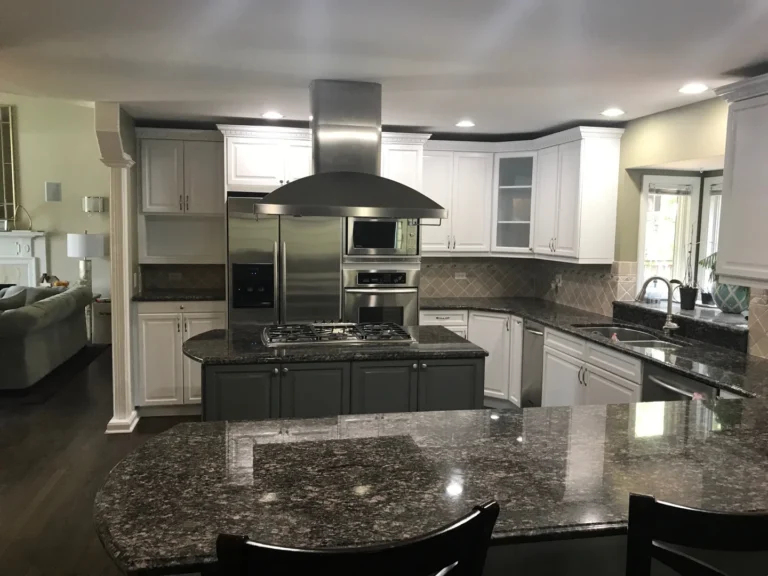
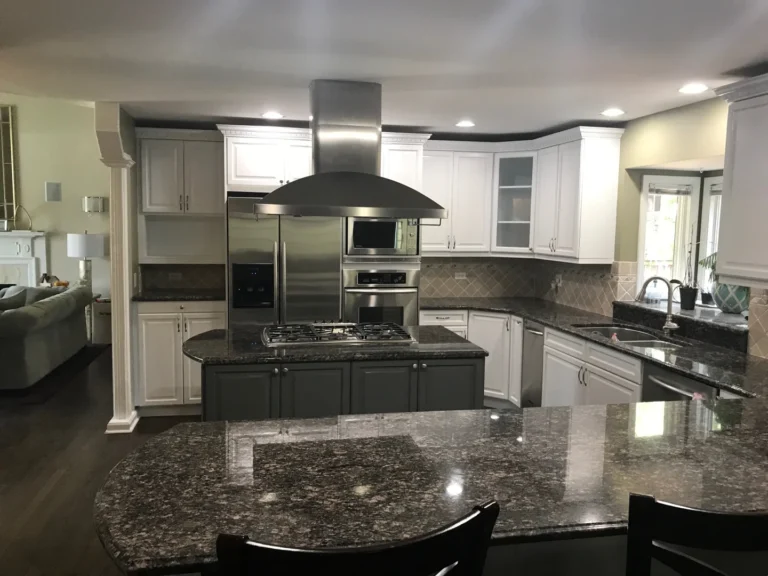
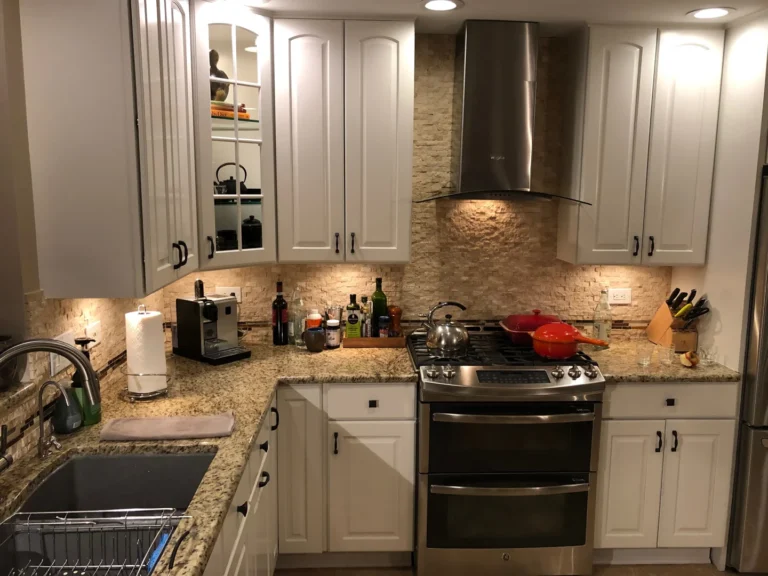
White kitchens have been popular for a long time, and there is a reason. Light cabinets make a room feel larger and brighter. That helps a lot in Chicago, where winter days are short and many older kitchens have only one window or face a gangway.
White also gives you a calm background. You can add color with a backsplash, paint on the walls, a colored island, bar stools, rugs or dishes. When you get tired of that color, you change the small things, not the cabinets. If you want ideas for that layer, our guide to kitchen backsplash tile ideas is a good place to start.
Choosing the Right White
Not all whites look the same. Some lean warm, some lean cool, and the light in your kitchen changes how they look. Before you decide:
- Look at painted samples in your own kitchen in the morning and in the evening.
- Hold samples next to your countertop and flooring choices.
- Pick a slightly warmer white if your kitchen gets little daylight. Cool whites can look gray in a dim room.
If white feels too plain, soft off-whites, light grays and pale wood tones also age well. Very dark or very bright cabinet colors are the ones most likely to feel dated first.
Painted or Refaced Cabinets: Refresh Without Starting Over
Not every kitchen needs new cabinets. If your cabinet boxes are solid, square and in good shape, you can often update the look and keep the budget under control.
Painting Existing Cabinets
Painting is the simplest update. Done well, it means cleaning, sanding, priming and using a durable cabinet paint, not wall paint. Doors and drawers are usually removed and finished separately for a smooth result. Painting lets you choose exactly where to use color, such as a darker island with lighter perimeter cabinets.
If your home was built before 1978, old cabinets and trim may have lead-based paint. Sanding it creates hazardous dust. Work like this should be done with lead-safe practices. You can read more about the rules on the EPA Renovation, Repair and Painting Program page. HQ Carpentry is EPA Lead-Safe certified.
Refacing Existing Cabinets
Refacing goes a step further. The cabinet boxes stay, but they get new doors, drawer fronts and a fresh outer veneer, plus new hinges and hardware. This is a good choice when you like your layout but want a completely new style. Learn more on our kitchen cabinet refacing page.
When cabinets are damaged by water, falling apart or in the wrong layout, replacement is usually the better choice.
Kitchen Remodeling in Chicago: How to Plan a Kitchen That Lasts
A kitchen that stays in style starts with good planning. For layout and storage ideas, see our complete kitchen renovation planning guide. Here is the order we suggest:
- Start with how you cook and live. Think about storage, seating and how many people use the kitchen at once.
- Fix the basics first. Old wiring, old plumbing and weak subfloors are common in older Chicago homes. These should be checked before finishes are chosen.
- Pick the long-lasting items next. Shaker or flat-panel doors, quartz or stone counters in quiet colors, simple tile and wood or wood-look floors all age well.
- Plan light and air. Layered lighting and a range hood that vents outside make the kitchen easier to use, especially in winter when windows stay closed.
- Add personality last. Paint colors, hardware, lighting fixtures and decor are easy to change later.
- Check permits and building rules. Many kitchen remodels need a permit, and condos often have their own rules on work hours, deliveries and noise. We check what your permit and building require.
Cost depends on the size of the room, whether walls, plumbing or gas lines move, cabinet choice (new, refaced or painted), countertop material and the condition of what is behind the walls. A fixed written quote helps you see each of these up front. You can see all our kitchen services on the kitchen remodeling page.
Frequently Asked Questions
What kitchen styles stay in style the longest?
Kitchens with simple shapes, light or neutral cabinets and durable surfaces tend to last the longest. Shaker or flat-panel doors, quartz or stone counters, a large sink and a simple tile backsplash have stayed popular for a long time because they are practical. The safest plan is to keep the expensive, hard-to-change parts simple and neutral. Then add color and personality through paint, hardware, lighting and accessories. Those are easy and less costly to change when your taste shifts or a new trend comes along.
Is a farmhouse sink a good idea for an older Chicago home?
Yes, in most cases. A farmhouse sink suits the character of many bungalows, two-flats and greystones, and it is very practical for large cookware. The main things to plan for are the sink base cabinet and support, because these sinks are heavy. It is also smart to have the old drain and supply lines checked during the work. Planning the sink early in the design avoids surprises later in the project.
Should I paint, reface or replace my kitchen cabinets?
It depends on the condition of your cabinet boxes and your layout. If the boxes are solid and you like the layout, painting is the simplest refresh. Refacing gives you new doors, drawer fronts and hardware for a completely new look while keeping the boxes. If cabinets are water-damaged, poorly built or in a layout that does not work, replacement makes more sense. During a free in-home estimate, we look at the cabinets and explain which option fits your kitchen remodeling in Chicago.
Do I need a permit for a kitchen remodel in Chicago?
Many kitchen remodels need a permit, especially when the work involves plumbing, electrical, gas lines or walls. Cosmetic work like painting cabinets usually does not. Rules differ between the City of Chicago and each suburb, and condo buildings often have extra rules for contractors. We check what your building department and your building require before work starts and handle the permit process as part of the job, so you know the work is done to code.
Ready for a kitchen that will still feel right years from now? Request a free in-home estimate. We come to your home, look at your space and give you a fixed written quote, backed by our 1-year workmanship warranty.
Ready to start your remodel?
Tell us about your project and we'll follow up with next steps.
Free Quote