
Digging Deep: How to Find the Best Basement Finishing Companies
Key Factors to Consider When Choosing Basement Finishing Companies
When you decide to transform your cold, concrete cellar into a functional family hub, selecting the right partner is paramount. The Chicago area features unique geological and architectural traits—from historic bungalows in Lincoln Park to expansive modern properties in Oak Brook. This means generic, one-size-fits-all contractor methods simply will not cut it. Working with specialized basement finishing companies ensures your lower level is built to last.
A professional basement renovation requires deep knowledge of local building codes, structural engineering, and moisture control. A qualified contractor understands how to navigate the specific challenges of local homes, such as low ductwork or old masonry walls. To make sure you are moving in the right direction, start your search locally by exploring Stop Crawling and Start Finishing with Basement Renovation Near Me to learn how we help homeowners maximize their square footage.
Verifying Credentials of Basement Finishing Companies
Before you invite any crew into your home, you must verify their legal and professional credentials. In Illinois and specifically within Cook County and Chicago, strict guidelines govern general contracting work. Any business you consider must carry comprehensive general liability insurance and active workers’ compensation coverage to protect you from liability during construction.
Additionally, make sure your contractor holds the correct local municipal licenses. Chicago has its own specific licensing requirements, which differ from those in suburban communities like Skokie, Evanston, or Arlington Heights. Look for affiliations with recognized industry trade groups, such as a NARI certification, which demonstrates a commitment to ethical standards and continuous professional education.
Evaluating the Reputation of Local Basement Finishing Companies
A company’s track record in your immediate neighborhood speaks volumes about what you can expect. Look beyond the marketing promises and dive deep into Google Reviews and third-party feedback platforms. A reputable contractor will gladly provide a list of local references from recent projects in areas like Glenview, Wilmette, or Northbrook.
Take the time to examine their physical portfolio of completed work. Look for design versatility, clean drywall finishes, seamless trim work, and creative solutions for structural columns. If you are looking for design ideas that work beautifully in local homes, browse through these Inspiring Chicago Finished Basement Designs and Layouts to see what is possible for your space.
Navigating the Basement Finishing Process: Timelines and Estimates
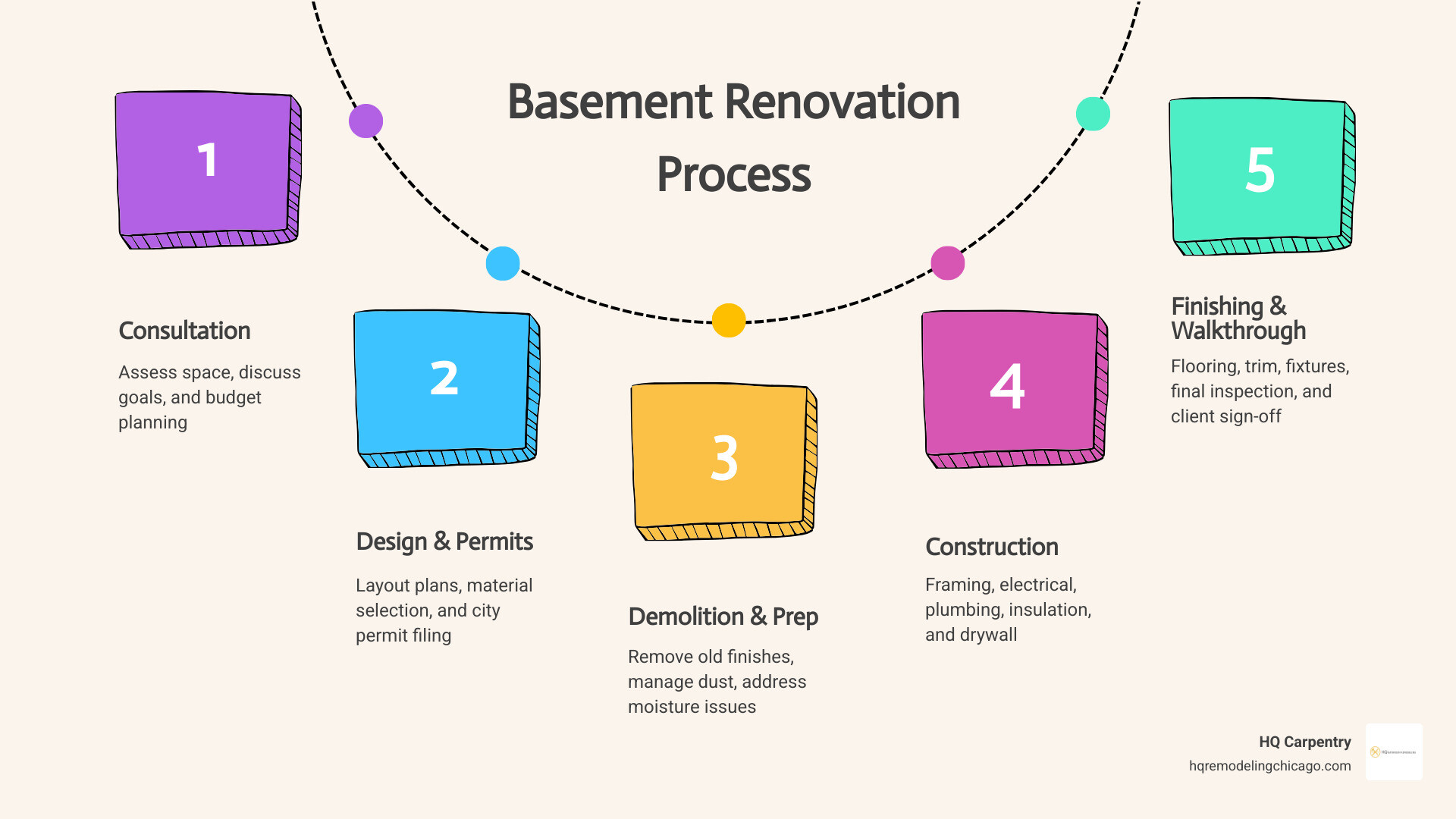
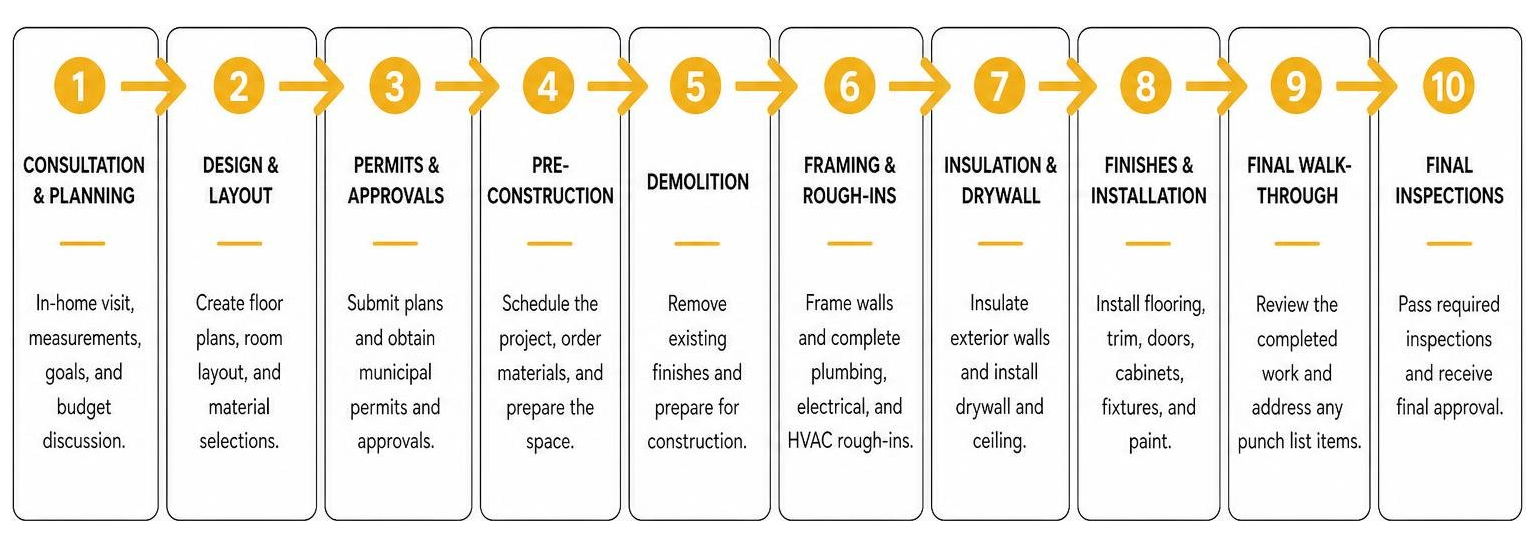
A successful basement remodel is a journey that requires careful planning, strict scheduling, and clear communication. Understanding the typical phases of construction helps you manage expectations and prepare your household for the temporary disruption. From the initial design and permit acquisition to the final paint stroke, every step must be executed in the correct sequence.
Securing the proper building permits is a critical early step. Whether you reside in the city or suburban areas like Oak Park or Downers Grove, skipping permits can lead to costly delays, fines, or issues when you eventually sell your home. For a detailed breakdown of the construction sequence, read our guide on Chicago Basement Finishing: What to Expect from Start to Finish.
To help you plan, here is a general breakdown of how a professional basement finishing project progresses:
| Project Phase | Key Activities Included | Typical Duration |
|---|---|---|
| Phase 1: Planning & Permits | Architectural drawings, zoning reviews, local permit approval | 2 to 4 weeks |
| Phase 2: Framing & Rough-Ins | Wall framing, electrical wiring, plumbing lines, HVAC ductwork | 2 to 3 weeks |
| Phase 3: Inspections & Insulation | Municipal framing/rough-in inspections, vapor barriers, insulation | 1 to 2 weeks |
| Phase 4: Drywall & Trim | Hanging drywall, taping, mudding, sanding, installing doors and trim | 2 to 3 weeks |
| Phase 5: Flooring & Finishes | Tile or luxury vinyl plank installation, painting, light fixtures | 1 to 2 weeks |
| Phase 6: Final Walkthrough | Final inspections, punch list completion, client handover | 1 week |
Managing expectations around your investment is also crucial. Unforeseen structural or plumbing issues behind old walls can quickly derail a budget if they are not planned for. To learn how to protect your finances, read about Basement Remodeling Estimates in Chicago: How to Avoid Budget-Busting Surprises.
Addressing Moisture, Waterproofing, and Insulation
Basements are naturally prone to dampness, humidity, and water intrusion due to their subterranean location. Before hanging a single sheet of drywall, your contractor must ensure the space is completely dry. Ignoring minor moisture issues now will inevitably lead to mold growth, ruined flooring, and compromised indoor air quality later.
A comprehensive waterproofing strategy often includes installing or upgrading sump pumps, applying exterior or interior vapor barriers, and ensuring proper foundation drainage. For a deep dive into keeping your lower level dry, check out The Homeowner’s Guide to Chicago Basement Waterproofing and Sump Pumps.
Additionally, we recommend following the FEMA flood mitigation guidelines to ensure your home remains safe during heavy seasonal storms. Proper insulation is also vital to keep the space warm in our freezing winters and cool during humid summers.
Egress Windows and Safety Requirements
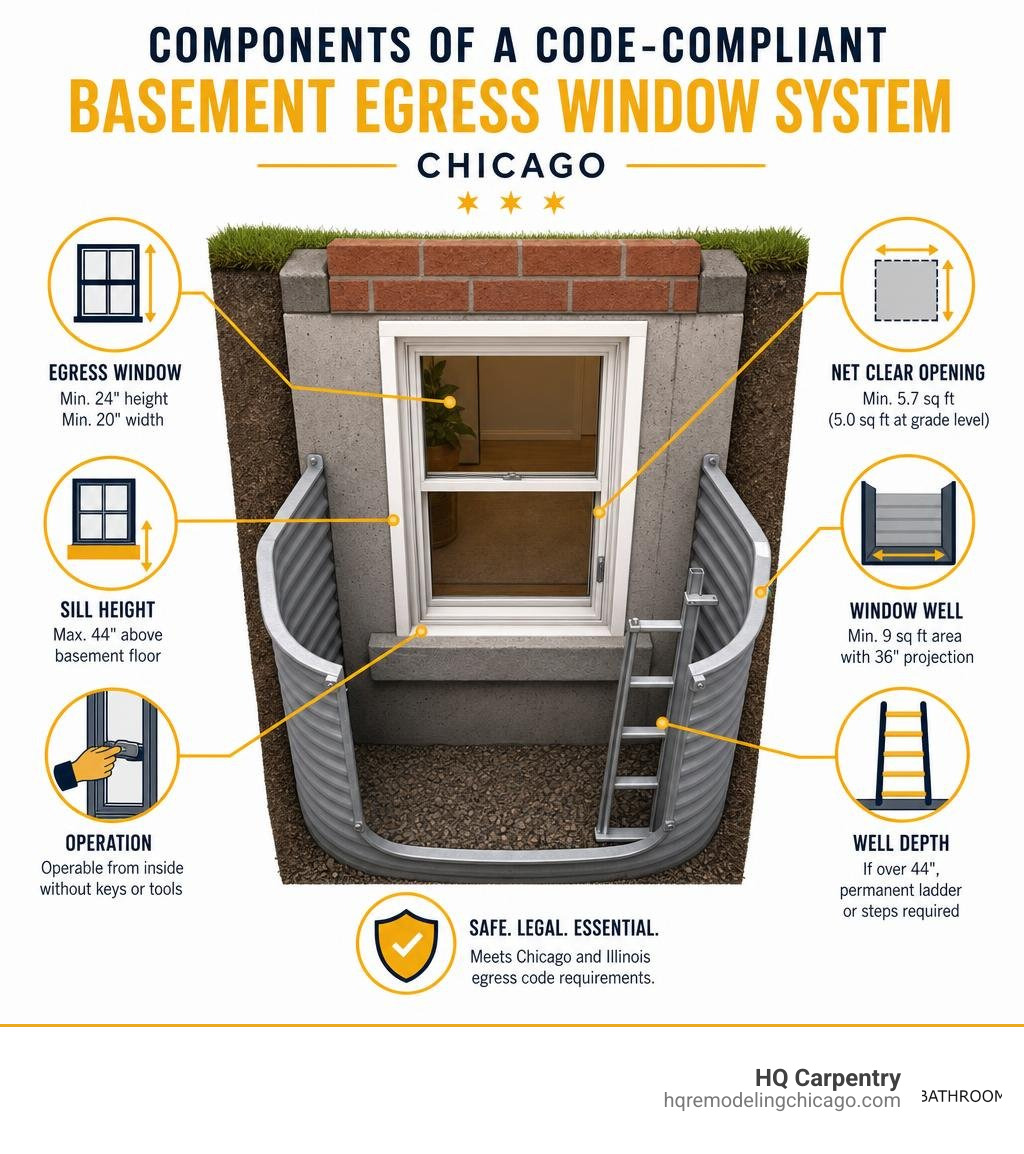
Safety should always be your top priority when planning a basement remodel. If your design includes a basement bedroom, office, or gym, building codes strictly require a secondary emergency exit. This is where egress windows come into play, providing a safe escape route in the event of an emergency.
Egress windows also have the added benefit of flooding your basement with natural light, making it feel less like a cellar and more like an integrated part of your home. To understand the installation process, read How to Install a Basement Egress Window Without Making a Mess. For specific local regulations, you can also consult The Windy City Guide to Legal Basement Egress Windows.
What to Look for in a Detailed Remodeling Contract
Once you have selected a contractor, never rely on verbal agreements or handshake deals. A professional remodeling contract protects both you and the contractor, ensuring everyone is on the same page from day one.
A highly detailed contract should always include the following elements:
- Scope of Work: A granular description of every task to be performed, from demolition to final cleanup.
- Payment Schedule: A clear milestone-based payment structure tied to completed phases of work, rather than calendar dates.
- Change Order Clause: A formal process outlining how changes to the original design or material choices will be documented and priced.
- Materials List: Specific brand names, model numbers, and colors for fixtures, flooring, and finishes to prevent substitutions.
- Timeline and Milestones: Estimated start and completion dates, along with key checkpoints along the way.
Common Mistakes to Avoid When Hiring a Contractor
Many homeowners make the mistake of automatically choosing the lowest bid they receive. While saving money is always attractive, an unusually low bid often indicates that the contractor is cutting corners, using subpar materials, or lacks proper insurance.
Another common mistake is attempting to skip the permitting process to save time or money. This almost always backfires during municipal inspections or future home sales. Lastly, never allow a contractor to cover up existing foundation cracks or moisture issues without fixing them first. If you are planning a broader renovation project, you can learn more about general remodeling best practices by visiting Home Remodeling Chicago.
Frequently Asked Questions About Basement Remodeling
How do I compare quotes from different contractors?
To compare quotes effectively, ask each contractor for a detailed, line-item breakdown. This allows you to verify that they are quoting the same quality of materials and scope of work. Ensure that labor warranties, permit fees, and cleanup costs are clearly outlined in each estimate so you are comparing apples to apples.
What questions should I ask during the initial consultation?
During your first meeting, ask who will be managing the project on a daily basis and how they handle subcontractor management. Inquire about their daily cleanup routines to protect the rest of your home from dust. You should also ask how they communicate updates and resolve unexpected issues during construction.
Does finishing a basement increase home resale value?
Yes, a professionally finished basement is highly attractive to buyers and can significantly increase your home’s market value. By adding valuable square footage for a family room, guest suite, or home office, you make your property stand out. To get started on planning your project, explore our main Basement Remodeling Chicago page.
Conclusion
Finding the right team to finish your basement does not have to be an overwhelming process. By focusing on proper licensing, local experience, and transparent contracts, you can ensure your project is a complete success.
Since 2011, HQ Carpentry has been helping homeowners across Chicago and the North Shore suburbs—including Skokie, Evanston, Wilmette, Glenview, Northbrook, Oak Brook, and Arlington Heights—transform their basements into beautiful, functional living spaces. Founded by Tomasz Pietrzyk, who brings over 15 years of hands-on industry expertise, our fully licensed and insured team is proud to maintain a 5.0 Google Reviews rating.
Are you ready to unlock the full potential of your home? Visit hqremodelingchicago.com to schedule your consultation and get a free estimate. Let us help you design and build a basement your family will love for years to come!
Ready to start your remodel?
Tell us about your project and we'll follow up with next steps.
Free Quote